Schlagwort-Archiv: Wolfgang Amadeus Mozart

[The New Listener international:] Interview Beth Levin 2015

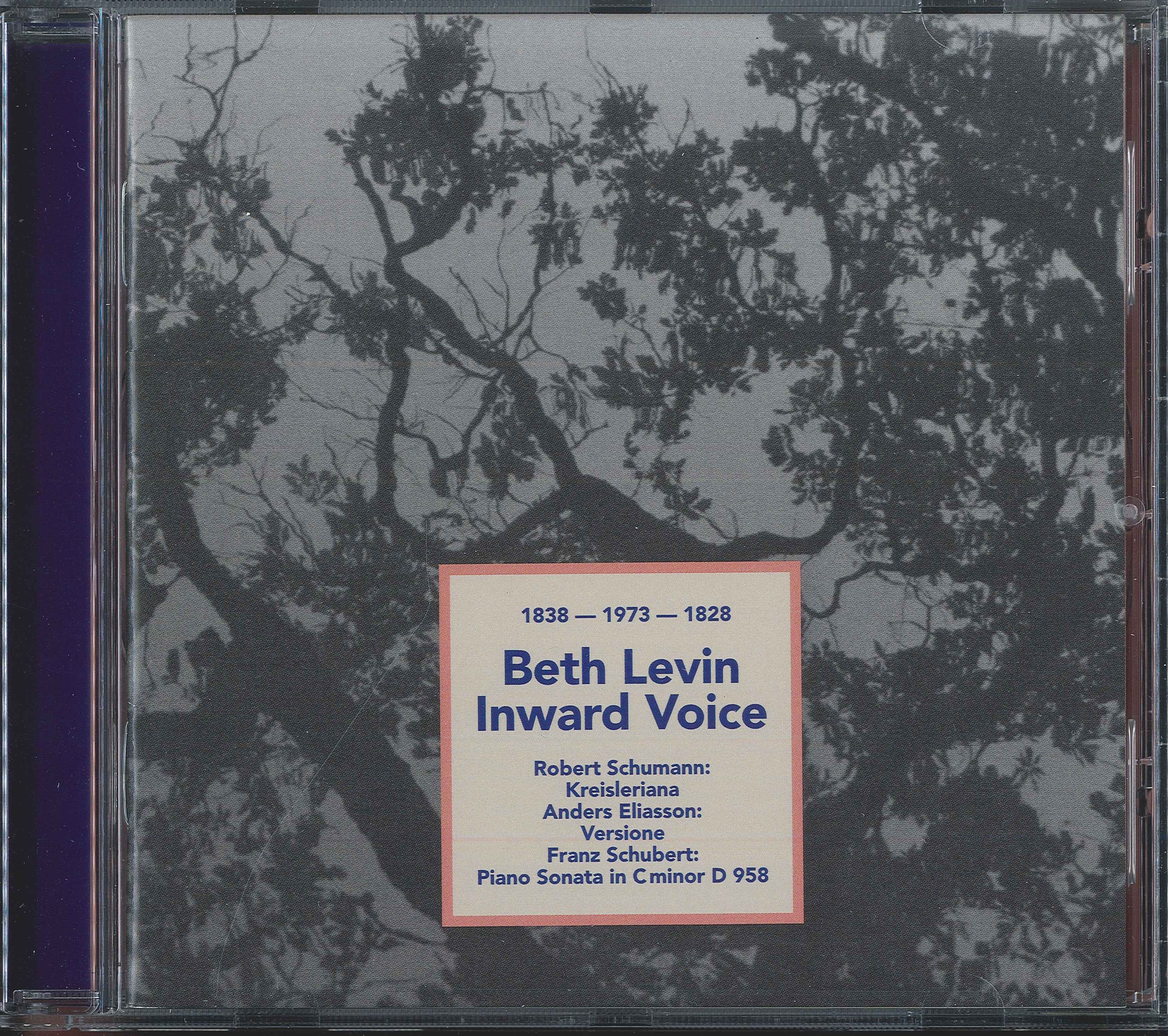
The CD „Inward Voice“ with music of Robert Schumann, Anders Eliasson and Franz Schubert of the American concert pianist Beth Levin will be published in America on the 8th of January. For „The New Listener“ I’m asking her about herself, the way of her unique style of playing and her new CD.
2-001

[Oliver Fraenzke:]
First of all I would like to talk about your origin and your influences. Your way of playing the piano is not the usual way we hear mostly, you developed a completely unique style that is more comparable with great masters of the early second half of the 20th Century than with contemporary pianists. Who have been your most important teachers and what have been other significant musical impacts? And why did you come to the decision of trying something new instead of just copying the well-known and fashionable habits of playing?

[Beth Levin:]
I feel that I have my own voice at the piano and if it is distinctive I am glad, but I haven’t set out to be different.

Having Marian Filar, Rudolf Serkin and Leonard Shure as teachers and growing up with the sound-palette they created naturally impacted my own playing. But again, each of us has his/her own voice at the instrument. For better or worse we cannot change it.
I think we all try to meet the demands of the music, and we use everything we have – ear, technique, knowledge, experience – to fulfill it.

So we can’t change our natural given sound, that everybody has unalterably. But what is it than we can work on to improve our playing?

Well I think that desire plays a large role in developing our technique and artistry at the piano. The more we want for the music the more we will grow.

Don’t be too satisfied. Reach for what you imagine and hope for the music in terms of sound, structure, phrasing, emotion, color- and you will grow as an artist I think.

In lessons Leonard Shure would listen to a phrase or two of music and ask „why?“. This was often disconcerting to the student. He never explained – you had to come up with reasons for each phrase of music.

Also I think that listening is so important- listen to singers, to strings and of course pianists especially the vintage recordings. One phrase of a Maria Callas can be life changing for your own playing. And let everything affect you- nature, art, literature…put it all into the instrument.

It is very interesting that you share the opinion that vintage recordings are more important than contemporary recordings, because for me your personal sound is also much more as if it were from that time. Why is it the vintage recordings that impresses you most? What do earlier pianist play „better“ than today’s musicians?

It may be a flaw of my own, but I am very drawn to the old recordings. I find the performances much freer on the whole, deeply felt and also that they relay a sense that the works are being recorded as a whole rather than pieced together.

Of course we have brilliant musicians now but the pressure to be perfect sometimes overtakes the artistry.

Is this the reason – to do „artistry“ instead of mindless „perfection“ – why you hesitated so long to reach fame and become an international concert star? Or is it more the fear of not having any life left beneath giving concerts all over the world?

I don’t know….let me think about this more…

Maybe I’m just happy when I have a concert coming up or any musical project, even if it’s happening around the corner. You know? I didn’t seek international fame, but I’m certainly thrilled at some of the attention I’m currently receiving.

I feel I have a great musical life, even if it is on a smaller scale. Also I wanted children very much and fashioned a life that would allow me to be in music and be a mother. I think that might have kept my musical life in check a bit.

You already mentioned three names of your most important teachers. Is it possible to focus the most important things you learned from them, what made them so significant for your own way of playing? Maybe you can say something about them, who they were and why you chose exactly them.

Marian Filar was like a father to his students and really allowed us to blossom. He was such a sensitive artist and when he played he had a gorgeous singing line and a special refinement. Listening to him play was an education. He and I shared the same birthday!

He stressed voicing, style, fingering and he fostered one’s deepest musicality. When I auditioned at Curtis Institute I had been brilliantly prepared by Filar. Also I performed two Beethoven concerti with the Philadelphia Orchestra under his guidance.

My time with Rudolf Serkin was almost a kind of musical adolescence because I was discovering new repertoire and chamber music. I was changing as a young artist and was not at all sure of what I was doing. My technique had been totally natural but now I was analyzing it and wanting more from it to match the larger, more demanding repertoire. He was a great inspiration at Curtis and at Music from Marlboro.

I had heard about the brilliant musician Leonard Shure from friends and knew he was going to be teaching in Boston. I literally knocked on his door and asked to play for him. He agreed and took me on as a student. He had an aesthetic close to Serkin’s but was even more demanding. I know many people who never got beyond four bars of music in lessons. I think the structure he built in a performance was unforgettable and a great lesson to us as we studied works of Beethoven, Schubert, Schumann, et cetera. And he was a great chamber music coach.

Dorothy Taubman lived in my neighborhood in Park Slope, Brooklyn and I became her student after moving to New York. I had young children at that point. She was a guru with technique which I think we always want to see to widen and grow. She could instill a great sense of freedom, adventure and curiosity in her students.

It looks like you have chosen splendid teachers for your way towards the music. After your explanation it seems you had the possibility of getting in contact as well with standard repertoire as with completely new and unknown pieces. On your latest cd, Inward Voice, we can hear one of the (yet) unpopular composer, the swedish master Anders Eliasson. Where and when have you heard of him first, was it with Rudolf Serkin?

The conductor Christoph Schlüren introduced me to Eliasson- I hadn’t known his music before. Now I’ve recorded two of his works for piano and hope to record a third next year.
I’m drawn to the spiritual aspect of his music, the rhythmic vitality, expressive ideas and its enigmatic quality.

Why was it among all composers Anders Eliasson that could enthuse you so much? What is it that makes him so special and unique?

I enjoy discovering new composers and Eliassson is both easy and difficult to understand. So the challenge of it is one thing that attracts me to his music. I like that his language is modern and yet there are roots to the western musical traditions which enables a player to feel somehow grounded even when the music is not familiar. It took me a while to see that I could be expressive and make a long line and could take my time inside of the score. I’m actually still on that journey with Eliasson as I work on the Disegno 3. I’m awed by his symphonic work and little by little hope to hear more of his output. I am working on his music today I also feel an inevitable, organic quality always present.

In America you are especially known for performing contemporary music. Do you think, all in all it is easier to become famous (corresponding in a special circle) by playing modern music? And what kind of the new art of sound do you prefer most?

I’ve been fortunate to have many fine composer friends whose music I like to perform. There is something great about receiving a new work in the mail with the ink barely dry. And to be able to work with the composer and discuss the music first hand.

Fame isn’t something to really predict or to try to decipher. One should simply work from the best intentions, always from the purest impulses and some notice may follow. Or it may not.
If 21st-century music is something you love most then you should follow that path. I wouldn’t say it necessarily brings fame along with it.

I think I play what I play best- but sometimes experiment with the unknown and see where it leads.

Beneath your steering towards contemporary composers like Scott Wheeler, Andrew Rudin, Yehudi Wyner, David Del Tredici, Mohammed Fairouz or the already mentioned Anders Eliasson you also have a passion for some etablished masters, especially for composers of the early 19th century like Ludwig van Beethoven, Franz Schubert or Robert Schumann. Why is it this epoch that draws you so much into it?

I have played much Russian and French repertoire as well, but have not recorded it.

But I think sometimes I do best when there is a great deal of structure and discipline to the music as in Schubert, Beethoven, Brahms and Schumann. I like when one’s emotions can work inside of a strict framework. The result can be very poignant and powerful. My teachers, especially the great artists Serkin and Shure, lived inside that repertoire and could relay a sense of that particular epoch.

And are you going to record the Russian and French music one day?
Mainly you have recorded extraordinary large works such as Bach’s Goldberg Variations or Beethoven’s Diabelli Variations as well as his last three and extensive Sonatas. Do those works mean a special challenge of the form for you, that inspires and attracts you?

Yes- I hope to record more and more and include French and Russian repertoire.

I think I have unconsciously followed my teacher’s kind of programming that always included large works- I like the „Mt. Everest“ works for the challenge and the all-encompassing feeling one receives from working on say the Goldberg Variations or Diabelli Variations.

Is there one favourite „Mount Everest“ for you?

I keep daring myself to learn Op. 106, Hammerklavier, of Beethoven. But sometimes you just have to be happy that others have done it so well and perhaps let it go.

The B flat piano concerto of Brahms is another „Mt. Everest“ for me- I’d love to perform it some day.

I think of some of the unexplored modern music as Mt. Everests. I hope there will be as yet unwritten ones waiting for me in my future.

In the end, nothing is easy. A Mozart Fantasy, say- to reach its simplicity and honesty is another kind of Everest.

This is a very true sentence, that also a little piece of music can be a Mount Everest. If I’m allowed to ask, what is the hardest peak to reach for you, on what kind of technique or musical demand do you have to practice most?

Generally speaking I’m aiming for a musical goal in any given phrase and if the technique doesn’t achieve what I’m after I really search for solutions. I don’t think about technique very much- that may be a flaw. I don’t know. I desire things in the music and reach for a technical way to create them. Never the other way round.

Technique is truly our servant, but without it we can’t do much. I admire technique in other players, but never above reaching for a musical goal. I’d rather hear the wrong notes if someone is obviously aiming for something divine.

Could you please give me an example: So if you are working on Beethoven’s Sonata Op. 111, what makes this one so difficult and so special? What is your musical goal playing this sonata?

In Op. 111 of Beethoven for example the music is almost more of a blueprint. You have to aim to meet the fullness of score, or match its demands. See behind the notes (take the fistfuls in the final movement) to the color, motion, and structure that the notes create.

In a work such as Op. 111 Beethoven is traveling somewhere special and the pianist must take that journey.

It’s a great challenge and a joy.

I think in works such as Op. 111 the performance itself leads to new ideas and opens new doors to sound…

I was thinking today, apropos of nothing really, how eloquence is such an important idea in music. Much like acting- when you watch a great actor and see how eloquently he or she turns a page, or stands up or uses his/her voice and facial expressions. And how he/she portrays something.

In music too we have to portray the music- take the notes and phrases and say something. I remember playing the Appassionata sonata of Beethoven as a young person and feeling so close to it- I knew I could portray it well because I had those emotions in my being. We have to own a large repertoire of emotions I think to portray a piece of music.

Anyway, how we play a phrase of music is important-how eloquently we state it.

Now we have been talking a little bit about a technically really difficult sonata by Beethoven, but what about a technically more easy work by Mozart? Do you take the same way to learn such a piece or is there anything different – or everything?

I don’t think there is a difference- you’re looking to find out what the music is doing, its direction, emotional context, structure. Easy usually winds up being deceptively easy.

The last piece of „Inward Voice“ is Franz Schubert’s Sonata No. 19 in C minor D 958. It is the first of the great three last sonatas of this short-lived composer, they build like a cyclical entirety even though each of these sonatas is very long. Why have you chosen this sonata out of the three? And would you agree that these sonatas have a special connection and a compelling cyclical form? Often you can read that the last movement of D 958 is much too long, just a ten minutes hunt without purpose that leaves the listener irritated and confused about what just occured – would you agree with this allegation? What do you see behind this coursing and what’s its message?

I’m working on D 959 now- perhaps I’ll get to experience playing all three and see the connections clearly. As you know I recorded the final three piano sonatas of Beethoven and for me this was a perfect next step, a perfect foil.

The influence of Beethoven seems strong – even down to the key of C minor. Perhaps Beethoven’s death affected Schubert deeply and opened the way for him to write these last sonatas in the way he did. I think there is the most contrast here – light and dark- and the final movement does gallop. Picking the right tempo might be the clue to succeeding in the
Tarantella. I don’t agree that it is too long.

Schubert died four months after completing the last three piano sonatas – a darkness permeates D 959 so perhaps he knew that he was not long for this earth.

Apart from Schubert and Eliasson there is another great work on „Inward Voice“, Robert Schumanns cyclical „Kreisleriana. Fantasien Op. 16“. You made something with this that is really special and unusual: You recorded the whole cycle in one long take instead of splitting it up in its movements. What was the reason for this?

I think when you study Kreisleriana you begin to feel that certain pieces belong together and that the timing between movements is very crucial to the performance. When I performed Kreisleriana live the timing was at the essence of the thing and I wanted to try to keep that in the recorded version.

Last but not least I would like to ask what you want to say to today’s artists. Is there anything you’d like to criticize in our music life, are there any advices you want to give to upcoming artists on their way, or is there something else you just would like to say?

Never lose your sense of obsession or your humility. I think young musicians today seek only fame and fortune and get caught up too soon in the business end of things. When I studied with Shure and Serkin our role models were different. We went after the art of making great music and less the outward reward. Always be a great observer and a great listener. Question the music, and use every influence in nature, art and life to better yourself as a musician.

The people I like most in music are the humblest. I mean I used to watch Rudolf Serkin give a recital and then go into a practice room to work on things he felt could have gone better. Imagine!

Specifically at the piano – develop your ear. Listening is almost everything and listening for something is even better – the desire!

Beth Levin: Inward Voice
Aldilà Records ARCD 005
EAN: 9 003643 980051
[to the German review]
Meine „CD des Jahres“

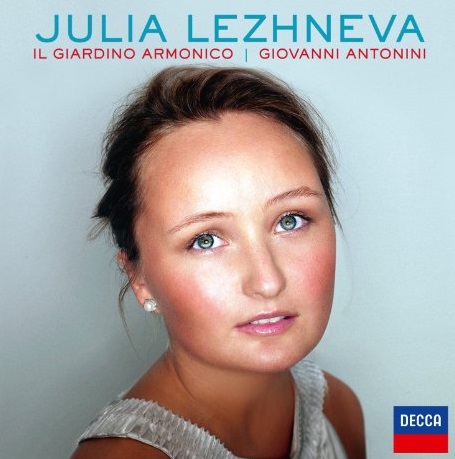
Julia Lezhneva
Alleluja
Il Giardino Armonico / Giovanni Antonini

Antonio Vivaldi ( 1678-1741)   Georg Friedrich Händel (1685-1759)
Nicola Porpora (1686-1768)   Wolfgang Amadeus Mozart (1756-1791)

Decca  478 5242
ISBN: 0 28947 85242

Ulrich0010

Alleluja (Lobet Jehovah) ist der Titel dieser CD, die für mich eigentlich so etwas wie eine „CD des Jahres“ ist, auch wenn sie schon 2013 erschien – jetzt erst landete sie als Geschenk auf meinem Gabentisch.

Um es gleich vorweg zu sagen: So berührend, ergreifend, frohmachend und herzerfüllend habe ich schon lange keine Sopranistin mehr singen – besser jubeln – gehört wie die junge, damals 23-jährige russische Sopranistin aus dem fernen Sachalin. Zusammen mit dem Ensemble „Il Giardino Armonico“ unter seinem  Leiter Giovanni Antonini gelingt hier eine ungeheuer musikalische Aufführung von vier Motetten, die jeweils mit einem „Alleluja“ enden. Als erstes eine tieftraurige, melancholisch-dramatische Komposition von Antonio Vivaldi, „In furore iustissimae irae“, ein eher wenig bekanntes Werk, das in der eindrucksvollen Kombination aus Schnelligkeit und Verhaltenheit – besonders im zweiten Satz – die ganze Bandbreite von Antonio Vivaldis Ausdrucksspektrum vorstellt. Es folgt die Motette „Saeviat tellus inter rigores“ von Georg Friedrich Händel: auch hier wieder eine gelungene Mixtur aus virtuosen und getragenen Passagen, bei der Julia Lezhneva alle Register ihrer meisterhaften Stimmführung und  -beherrschung zeigen kann, allerdings immer im Sinne der Frau Musica und nicht als Ego-Trip wie bei so vielen anderen Sängerinnen und Sängern.
Ihre Stimme ist auch in den bewegtesten Koloraturen leicht, sehr obertonreich, und dabei spürt man, dass sie eben keine Mädchenstimme hat, sondern trotz ihrer Jugend mit all ihrer Leiblichkeit und Körperlichkeit singt. Die hohen Töne kommen nicht als abgesetzte „Spitzentöne“, sondern im Zusammenhang der Bögen, zu denen diese entweder hinführen oder als deren Höhepunkt den Abfluss der Linie einleiten. Und all das „getoppt“ von einem Jubel-Laut im Singen, der besonders ans Herz rührt.

Obwohl ich ja sonst eine Lanze breche für die langsamen Tempi, die heute von den allermeisten Künstlern nicht adäquat erfasst werden – was sicher auch am vielen „Üben“ und am wenigen „Nachsinnen“ liegt – bin ich immer wieder überrascht, mit welchen Geschwindigkeiten das italienische Ensemble aufwartet. Und zwar nicht nur schnell, sondern dabei eben auch wunderbar phrasierend, allen Phänomenen gerecht werdend, und ebenso schnell vom Bewusstsein und vom Geist her. Mir fällt als positives Beispiel immer wieder auch der Jazz-Pianist Cecil Taylor ein, der eben nicht nur rasende Geschwindigkeit zaubert, sondern die nötigen geistigen Voraussetzungen für diese Tempi und die dann immer noch unerlässlichen und verständlichen Phrasierungen mitbringt.

Dann entstehen wie auf dieser CD Momente des Glücks und der Beschwingtheit, die süchtig machen können. Und zwar bei allen vier Stücken, von denen das von Nicola Porpora einen weniger bekannten, sehr melodiösen Komponisten vorstellt.
Dass die inzwischen berühmte Vivaldi-Aufnahme von Cecilia Bartoli bei der 11- oder12 jährigen Julia den speziellen „Kick“ auslöste, davon erzählt die junge Russin, aber eben auch von der Zusammenarbeit mit Giovanni Antonini, von der sie sicher umfassend profitierte.
Natürlich ist mit „Exsultate, iubilate“ von Mozart ein besonderes „Schmankerl“ an den Schluss dieser außergewöhnlichen Scheibe gesetzt, der auch ein mehrsprachiges Booklet mit allen Motetten-Texten beigefügt ist.

So küre ich mit Dank und Freude diese CD zu meiner „CD des Jahres 2015“ und bin gespannt darauf, was wir noch alles von Julia Lezhneva zu hören bekommen werden.

[Ulrich Hermann, Dezember 2015]

Pfiffige Bläser auf Pionierreise

Arcana A 391, ISBN: 3 760195 733912

201511261141_0001

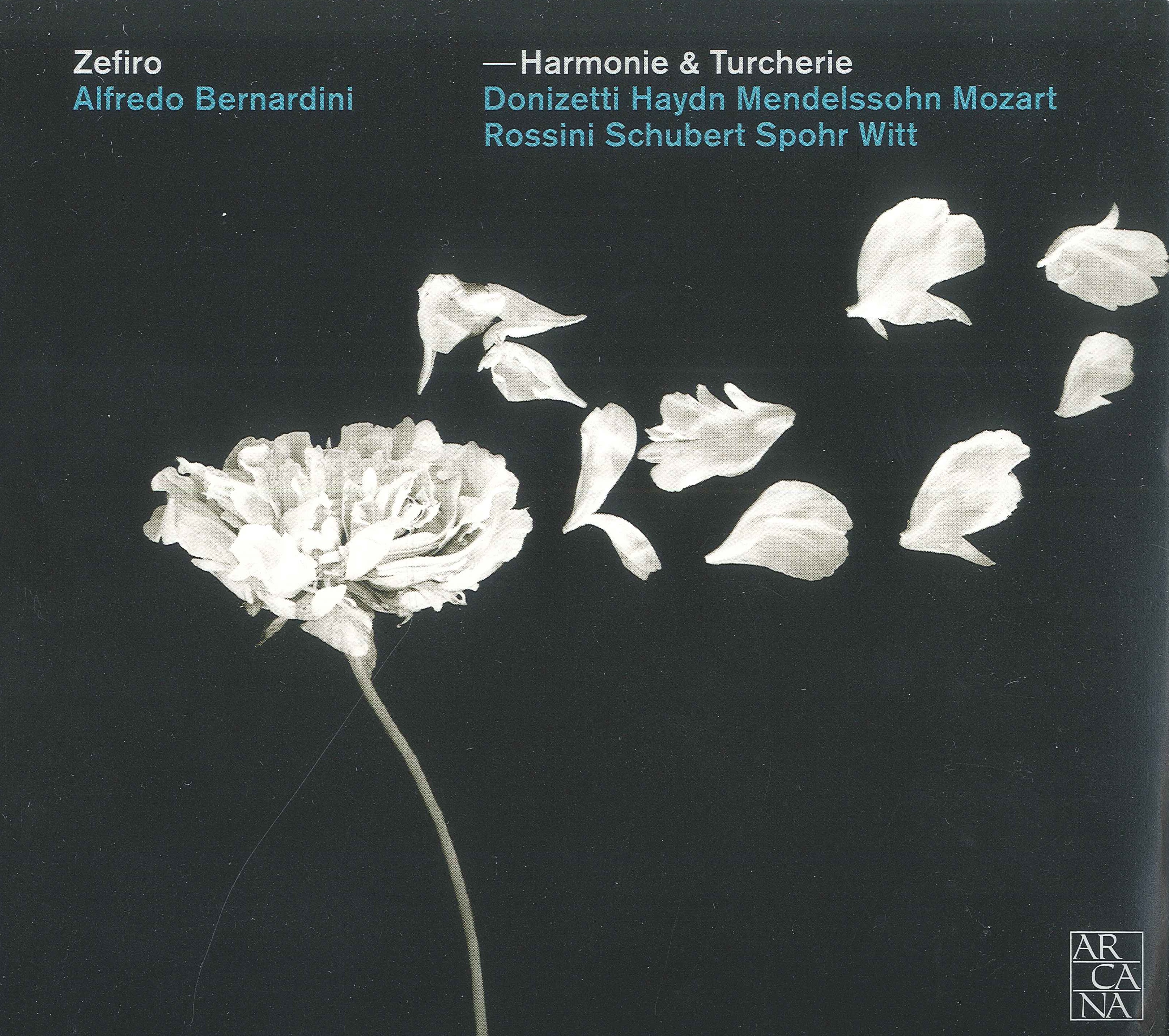
Das Bläserensemble Zefiro spielt unter Leitung seines Gründers Alfredo Bernadini Werke von Michael und Franz Joseph Haydn, Wolfgang Amadeus Mozart, Friedrich Witt, Gioacchino Rossini, Gaetano und Giuseppe Donizetti, Felix Mendelssohn-Bartholdy, Franz Schubert und Louis Spohr.

Nicht ohne Augenzwinkern wird man schon den Titel der vorliegenden CD des Labels Arcana, nunmehr Teil des Outhere music-Imperiums, zur Kenntnis nehmen. Dabei ist es ein durchweg seriöses Anliegen, welches der versierte Oboist Alfredo Bernadini mit einigen Gleichgesinnten hier zum Ausdruck bringen möchte. Es handelt sich, wie man dem sehr ausführlichen und historisch fundierten Booklettext Bernadinis entnehmen kann, um zweierlei: Zum einem um die Tatsache, welch eigenständige, aber gerne unterschätzte Rolle Bläserensembles und -orchester in der Musikgeschichte spielten; zum anderen um die Faszination des neuzeitlichen Europa für morgenländische Exotismen in der Kunst, die generell als „Türkerien“ bezeichnet wurden. Beide Phänomene, sowohl an und für sich als auch in der Symbiose, interessierten diverse namhafte Komponisten, und die daraus resultierenden künstlerischen Ergebnisse haben nun Bernadini und dessen Zefiro-Ensemble zu einem Konzeptalbum vereinigt.

Den Start dieser Pioniertat, die im Januar diesen Jahres in der Gustav Mahler-Halle in Toblach mitgeschnitten wurde, macht Michael Haydn mit einem Türkischen Marsch für Bläser. Dafür, dass dieser Meister oft auf die Rolle des Salzburger Dommusikmeisters eingeschränkt erscheint, beweist der Marsch erstaunliche Frische und Einfallsreichtum, was die Zefiri mit Neugier und Spielfreude direkt umsetzen. Einen angenehmen Kontrast dazu bietet die Introduzione zum zweiten Teil der Sieben letzten Worte des Erlösers am Kreuze von Franz Joseph Haydn in einer Fassung für Bläser. Sehr zu loben ist bei den authentischen Instrumenten und deren Nachbildungen das Wiener Kontrafagott von Augustin Rorarius, welches Maurizio Barigione rein und stimmig beherrscht, was gerade bei historischen Instrumenten und deren Stimmung nicht selbstverständlich ist.

Insgesamt ist es der reizvolle Wechsel zwischen Wiederentdeckungen und „Altbekanntem“ (in neuem Gewand), was die CD so lohnenswert macht. Hierzu trägt ein weiterer Komponist im Schatten seines prominenten Bruders bei: Giuseppe Donizetti. Zwar musste Bernadini dessen Marsch für Mahmud in F-Dur entsprechend bearbeiten, doch ist dies eine von zwei Ausnahmen auf der CD, zumal es sich hier um Musik handelt, die sich nicht hinter dem Werk Gaetanos zu verstecken braucht.

Vor allem jedoch ist es der musikalische Anspruch, den Bernadini und seine Musiker bei aller Liebe zu historischen Details verfolgen. Besonders beim Concertino für Oboe und Harmoniemusik von Friedrich Witt – lange fälschlicherweise Carl Maria von Weber zugeschrieben – beweisen die Mitwirkenden, dass sie mehr können als nur musikalische Baisers zu bieten. Mit Leichtigkeit, Ernst und Sinn für das Konzertante geben sie dieses Kleinod wieder.

Auch ein Nocturno in C-Dur MWV P.1 Felix Mendelssohn-Bartholdys, das dieser mit gerade 15 Jahren schrieb, weist eine ähnliche Großanlage auf. Wenn hier das Allegro vivace eintritt, macht sich der Begriff „Harmoniemusik“ auf andere Art bemerkbar: Mit stetem klanglichen Zusammenhalt präsentieren die Zefiri einen symphonischen „Frühwurf“ des Komponisten, der trotz seiner großen Anlage keineswegs überladen, sondern transparent und durchdacht wirkt. Lediglich an einigen leisen Stellen vergreift sich die Flöte mal, doch wäre es kleinlich, daraus ein großes Manko zu konstatieren.

Gelegenheit zur solistischen Gestaltung erhalten die Hornisten Dileno Baldin und Francesco Meucci in den ersten zwei Minuten der Kleinen Trauermusik Franz Schuberts D 79. Gerade für alte Hörner ist es nicht leicht, einen sauberen und musikalischen Duktus zu finden, zumal in einer Tonart wie es-Moll. Das gelingt den beiden Musikern hier jedoch tadellos. Im gemessenen Grave-Rhythmus und unsentimental formen sie diese Trauermusik, auch zusammen mit anderen Bläsern, als schönen Gegenpol zum vorhergehenden Nocturno. Nichtsdestoweniger ist es die eher heitere Seite, die das Ensemble Zefiro insgesamt hauptsächlich vertritt, so auch beim großen Abschluss der CD, dem Notturno Op. 34 von Louis Spohr. Nicht umsonst erinnert der erste Satz in C-Dur dieses sechssätzigen Werkes wiederum an Haydns Türkischen Marsch. Umso differenzierter komponiert ist das folgende Menuetto allegro, in c-Moll stehend, zugleich auch beschwingter. Ganz im Stile seiner Zeit klingt das Thema des dritten Satzes, eines Andante von variazioni. Und gerade hier zeigen die einzelnen Musiker, wie viel Leben, Virtuosität und Facettenreichtum sie aus ihren Instrumenten hervorlocken können, zumal man nicht unbedingt den Eindruck bekommt, es handle sich hier um radikale „historische Aufführungspraxis“.

Keine Türkerie, aber sehr wohl ein historischer Exotismus ist die folgende Polacca mit Trio, und auch hier fehlen niemals die Spielfreudigkeit und klangliche Ausgewogenheit des Ensembles. Geht man davon aus, dass ein Nocturno eher ruhig und dunkel zu klingen habe, so erfüllt diesen Stereotyp am ehesten das darauffolgende Adagio, welches die Zefiri mit gleichmäßigem Fluss sowie mit Ernst ohne Schwere zu spielen vermögen. Doch schließt Bernadini seinen Booklettext nicht umsonst mit folgendem Satz: „Es mag überraschen, dass so viele laute Instrumente für eine Nocturne vorgesehen sind… Aber wer sagt denn, dass die Zeit der Nacht beständig ruhig sein soll?“ Die Antwort liegt im letzten Track der CD, dem Finale vivace, einem Rondo. Darin offenbaren die Musiker, vor allem die Klarinetten, nochmals ihr ganzes technisches und musikalisches Können, ohne dabei zu eilig oder gar lärmend zu klingen, und beschließen somit ihre pfiffige Pionierreise durch die Zeit, die zugleich ein kleiner Beitrag zum eher vernachlässigten Repertoires ist, würdevoll ab.

[Peter Fröhlich, Dezember 2015]

Schönklang mit Mozart

Genuin classics Gen 15371; EAN: 4 260036 253719

11

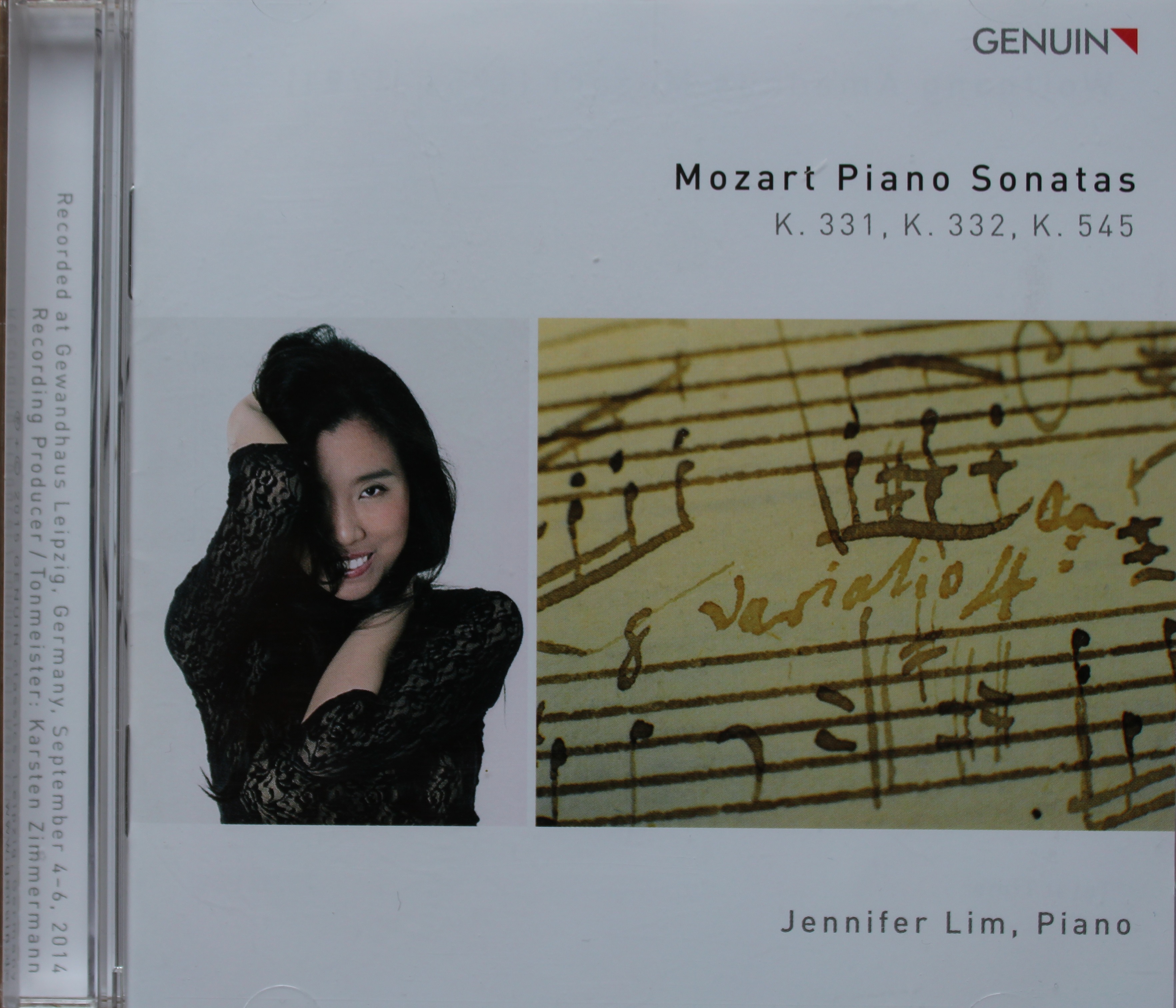
Die Klaviersonaten Nr. 16 in C-Dur KV 545, Nr. 11 in A-Dur KV 331 und Nr. 12 in F-Dur KV 332 von Wolfgang Amadeus Mozart sind auf der Neuerscheinung der koreanisch-kanadischen Pianistin Jennifer Lim beim Leipziger Label Genuin Classics zu hören.

Eine gute Darbietung der Musik Wolfgang Amadeus Mozarts sei eine der höchsten Künste für einen Pianisten, heißt es immer wieder. Und tatsächlich erweist es sich als Herausforderung der Extraklasse, diese so scheinbar leicht überschaubare und technisch zumeist auch für Laien bewältigbare Musik wirklich zu ergründen. Jede Melodie ist mit aufmerksamstem Fingerspitzengefühl in detailliertester Feinheit auszugestalten, die Unterstimmen dürfen dabei trotz oft ostinaten Figurenwerks niemals mechanisch werden, und auch sie bergen fortwährend herrliche Melodieelemente und offenbaren harmonische Finessen, die nach der heute gewohnten Erfahrung chromatisch-dissonant aufgeladener Musik zwar bei Weitem nicht mehr so stark wirken wie damals, aber umso mehr ständig neu entdeckt werden müssen. Und indem all dies klingende Gestalt wird, hat der Pianist die wohl komplexeste Aufgabe wahrzunehmen: Die Bewältigung der Form als zusammenhängendes Erlebnis, als nicht abreißender, atmend artikulierter Spannungsbogen. Wie soll man mit den themeninternen Melodiewiederholungen umgehen, wie sieht dies wiederum in großen Wiederholungen aus, auf welche Art transzendieren die Kontraste dabei und wie soll mit neu auftauchendem Material innerhalb der so oft wiederkehrenden Motive umgegangen werden? Diese und noch viele andere Fragen sind maßgeblich für ein adäquates Mozartspiel.

Jennifer Lim hat für ihre Einspielung drei grundverschiedene Sonaten ausgewählt. Sie beginnt mit der schlichten Sonate C-Dur KV 545, der spätesten der drei vorliegenden Werke, welche von Mozart als kleine Sonate für Anfänger bezeichnet wurde und heute vor allem durch den in der Erstausgabe abgedruckten Titel „Sonata facile“ berühmt ist. Doch wer sie einmal intensiv erarbeitet hat, weiß, dass dieser Titel auch auf den zweiten Blick noch trügt, denn so facile ist es keinesfalls, die Natürlichkeit auch ungekünstelt und frei entstehen zu lassen. Noch populärer ist die Sonate in A-Dur KV 331, vor allem deren Finale „Alla Turca“. Eindrucksvoll gestaltet ist in dieser vor allem der erste Satz, ein circa viertelstündiger Zyklus aus sechs Variationen über ein höchst anmutiges Thema. Ein verschollen geglaubtes umfassendes Teilautograph Mozarts dieser Sonate wurde 2014 in Budapest entdeckt und führte zu einer neuen Ausgabe des Verlags G. Henle, was allerdings auf der vorliegenden Aufnahme noch nicht umgesetzt wurde. Abschluss des CD-Programms bildet die F-Dur-Sonate KV 332, fünf Jahre nach der in A-Dur entstanden. Hier herrschen extreme Kontraste zwischen Dur und Moll, ganz unerwartet braust im Kopfsatz d-Moll auf und verdrängt das zarte Thema. Spannend gibt sich auch das Finale, eine unablässig herrschende Jagd, die im Gestus schon fast an den vierten Satz von Franz Schuberts Sonate c-Moll D 958 anklingen mag, der genau 50 Jahre später geschrieben wurde.

Die Pianistin vertritt ein sehr eindeutiges Bild von Mozart, ihr Spiel ist durchgehend äußerst zart und stets dem geordneten Wohlklang verpflichtet. Jede Stimme wird hörbar durch die präzise Fingerarbeit, die die aufbrausendsten Läufe wie ein leichtes Windspiel erscheinen lassen. So lädt Mozarts Musik unter den Fingern Jennifer Lims direkt zum Träumen ein, so wohl fühlt sich der Hörer in den kristallinen Strukturen. Zwar verzichtet sie dabei auf eine genaue Einhaltung der vorgegebenen Dynamiken und auf die von Mozart minutiös differenzierten Akzentuierungen, doch ist dies dem nur auf diese Art entstehenden Gesamteindruck geschuldet, und da dieser auch sinnvoll überdacht ist, ist ein solcher Eingriff durchaus wohlgefällig. Deutlich spürbar ist die Zuwendung zu dieser Musik, die sich in jeder Note des Spiels von Jennifer Lim manifestiert und den Hörer angenehm berührt. Lediglich zwei Aspekte stören ein wenig das Gesamtbild dieser Aufnahme: Zum einen ist es die Angewohnheit, unreflektiert jede einzelne Wiederholung zu spielen ungeachtet dessen, ob es auch hinsichtlich der Gesamtform Sinn ergibt. Bei Mozart haben zwar die meisten Wiederholungen eine Bedeutung, sofern sie auch mit eben dieser umgesetzt werden, doch ist es meines Erachtens musikalisch redundant, die Wiederholung der Durchführung und Reprise im Sonatenhauptsatz zu exerzieren. Es ist nahezu unmöglich, vom Schluss des Geschehens noch einmal in den Höhepunkt des Satzes zu springen, nur um daraufhin nachvollziehbar zum gleichen Ende zurückzukehren und dabei eine durchgehende Spannung zu erzeugen. Das zweite, was stört, ist die automatische Zurückdrängung aller Unterstimmen unter die Melodie der Oberstimme. Gerade in der A-Dur-Sonate herrscht ein unglaublich vielfältiges Stimmengeflecht, und die tiefen Stimmen dürfen sehr häufig eigenständig in Beziehung treten mit dem Diskant. Wenn dies gut herausgemeißelt wird, können polyphone Passagen entstehen oder auch herzerwärmende Duette ertönen, so wie Liebesarien aus einer Oper. Zwar sind bei Jennifer Lim diese Unterstimmen deutlich wahrzunehmen, doch sich zu Gleichberechtigung aufzuschwingen vermögen sie nicht. Kleinere und nur punktuell spürbare Unstimmigkeiten wie zu spitze statt auf damaligen Klavieren nur mögliche etwas nachhallendere Staccati in der zweiten Variation der KV 331 fallen dagegen weniger ins Gewicht. Die Tempowahl ist größtenteils gut getroffen, besonders die langsamen Sätze erhalten einen soliden, weder eilenden noch stagnierenden Charakter, nur manches Allegro geht ein wenig zu geschwind nach vorne. Was der Pianistin exzellent gelingt, ist die Verwendung des Pedals, das zu keiner Zeit etwas nur ansatzweise verwischen lässt, aber doch präsent und oft eingesetzt ist. So verlieren die Sonaten nichts von ihrer tonlichen Präsenz und unbestechlichen Klarheit, gewinnen jedoch gleichzeitig an Obertönen und Klangraum durch das Pedal. Dazu nötig ist eine Beherrschung des Teilpedals in der oberen Hälfte der möglichen Senkung, die von den meisten Pianisten quasi überhaupt nicht genutzt wird.

Die Aufnahmetechnik im Mendelssohn-Saal des Gewandhauses Leipzig verleiht dem Klavier einen seidenen Klang, der wie gemacht zu sein scheint für das Spiel Jennifer Lims. Der Booklettext von Michael Juk aufgrund dessen Gespräch mit der Pianistin bietet zwar einmal eine neue Idee, die Werke durch ein subjektiv gefärbtes Licht darzustellen anstatt die so oft genannten Kompositionsdaten und Rezeptionsfakten erneut aufzuzählen, strotzt jedoch vor unnützen Details wie der Beschreibung des vor ihnen platzieren Essens (das zwar den Autoren satt gemacht haben mag, meinen Wissensdurst jedoch nicht stillen kann) und enthält natürlich hervorgehoben die wichtige Produzentenrolle Juks. Doch soll solch selbstverliebtes Getöse nicht ablenken von einer alles in allem durchaus gelungenen Darbietung von drei so herrlichen Sonaten aus der Feder des bis heute populärsten Komponisten weltweit: Wolfgang Amadeus Mozart.

[Oliver Fraenzke, Oktober 2015]